Blog

Read latest articles from Servoday Plants & Equipments Limited.

What are the key temperature phases during biomass pellet production in a Ring Die Pellet Mill?

What are the key temperature phases during biomass pellet production in a Ring Die Pellet Mill?

15 Sept 2024
2 mins read

(Test conducted by PelletIndia.com) Ring Die Pellet Mill at different phases for achieving optimal compression, density, GCV, moisture, and durability: 1. Temperature Phases in Pellet Formation First Phase (70°C): Purpose: At this stage, the temperature is moderate as the raw material is still in the initial stage of compression. Compression: Low to moderate pressure helps in forming the pellets while maintaining structural integrity. Moisture Content: Evaporation starts, and moisture gradually reduces to an optimal level. Pellet Density: The pellet density begins to increase as the material is compacted in the die hol [...]

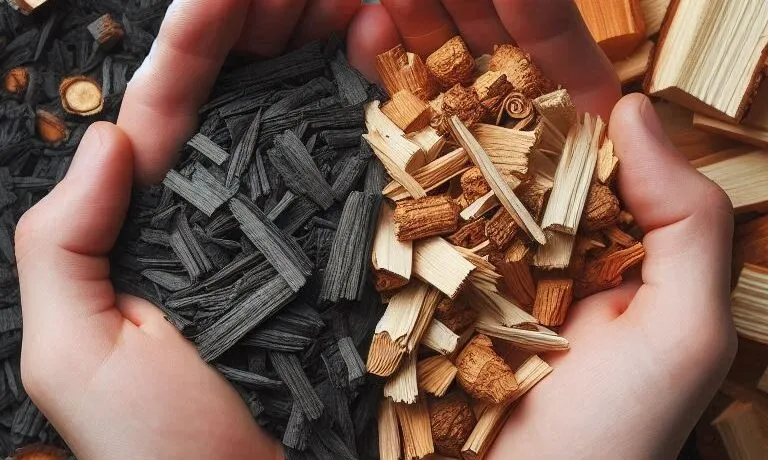
Charcoal, Carbonization, and Torrefaction of biomass materials relate to their processing temperatures, chemical properties, and end uses:

Charcoal, Carbonization, and Torrefaction of biomass materials relate to their processing temperatures, chemical properties, and end uses:

11 Sept 2024
5 mins read

1. Charcoal Production Process: Pyrolysis: Charcoal production involves pyrolyzing biomass at high temperatures ranging from 500°C to 700°C in the absence of oxygen. Stages of Pyrolysis: Drying Phase (up to 150°C): Removes moisture content. Decomposition Phase (150°C–500°C): Breakdown of hemicellulose, cellulose, and lignin into volatile gases and tar. Carbonization Phase (above 500°C): Formation of fixed carbon (charcoal) as volatile substances are driven off. Chemical Properties: High Fixed Carbon Content: Typically 70–90%, resulting in a dense energy source. Low Volatile Matter: Less than 15%, leading to c [...]

Gross Calorific Value (GCV) for torrefied and non-torrefied biomass pellets:

Gross Calorific Value (GCV) for torrefied and non-torrefied biomass pellets:

11 Sept 2024
1 min read

GCV of Biomass Materials (Torrefied vs. Non-Torrefied) to understand: 🌱 Biomass Pellet & Machinery Updates 🌾 Biomass Pellet & Machinery Hub 🌱⚙️ 📞 Contact Us for Biomass Solutions📍 Servoday Plants & Equipments Limited📞 +91 9427210483 | +91 9427210484📧 [email protected]🌐 www.PelletIndia.com👤 Contact Person: Sanjay Masuria📲 WhatsApp: +91 9427210483 PelletIndia.com – Concept to Commissioning Means, We Are With You! Since 1969 🚀🔥 Biomass MaterialGCV Non-Torrefied (kcal/kg)GCV Torrefied (kcal/kg)Factors Affecting GCVTypical UsesWood Chips3800-40004200-4500Moisture content, wood specie [...]

PelletIndia.com's recent trial of wood biomass chip torrefaction with biogas output provides some key insights. Here's a breakdown of the key points based on our data:

PelletIndia.com’s recent trial of wood biomass chip torrefaction continuous process:

8 Sept 2024
1 min read

PelletIndia.com‘s recent 1st trial of wood biomass chip torrefaction continuous process with biogas output provides some key insights. Here’s a breakdown of the key points based on our data: Wood Chip Properties: Size: 30mm, ideal for uniform processing in the torrefaction reactor. Total Moisture (TM): 3.45%, showing minimal moisture, reducing energy requirements. Inherent Moisture (IM): 2.94%, further contributing to energy efficiency. Volatile Matter (VM): 33.73%, ensuring efficient combustion. Ash Content: 6.62%, relatively low, improving fuel quality. Fixed Carbon (FC): 56.71%, enhancing the energy density of [...]

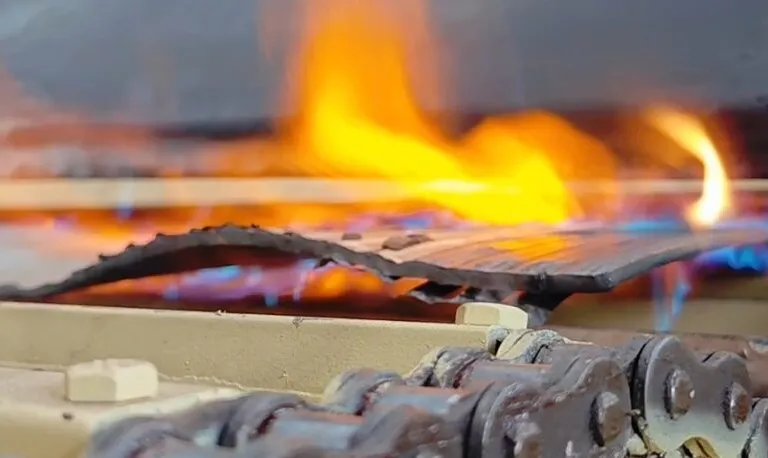
ACP STRIPPING, SHEET REMOVER

ACP Sheet Stripper / Sandwich Panel Peeling Cutting Machine

8 Sept 2024
1 min read

ACP SHEET STRIPPING MACHINE Aluminium Composite Panel (ACP) Recycling Machine Model: ACP Sheet Stripper / Sandwich Panel Peeling Cutting Machine Key Specifications: Capacity: 400-1000 kg/hr Input Sheet Width: 1.2 meters Power Requirements: 3 HP, 440V, 3-phase Control System: Variable Frequency Drive (VFD) controlled, Allows fine-tuned speed control and energy efficiency. Components: Peeling Mechanism: Efficiently separates aluminium and plastic layers. Discharging Mechanism: Facilitates continuous sheet output post-separation. Rollers & Sprockets: Ensures smooth material movement through the [...]