Blog

Read latest articles from Servoday Plants & Equipments Limited.

Which crop residues, such as Rice Straw, Wheat Straw, Bagasse, Maize Stalks, Cotton Stalks, Groundnut Shells, Soybean Stalks, Mustard Stalks, Sorghum Stalks, and Barley Straw, are commonly used for biomass pellet production in India?

Which crop residues, such as Rice Straw, Wheat Straw, Bagasse, Maize Stalks, Cotton Stalks, Groundnut Shells, Soybean Stalks, Mustard Stalks, Sorghum Stalks, and Barley Straw, are commonly used for biomass pellet production in India?

23 Nov 2024
3 mins read

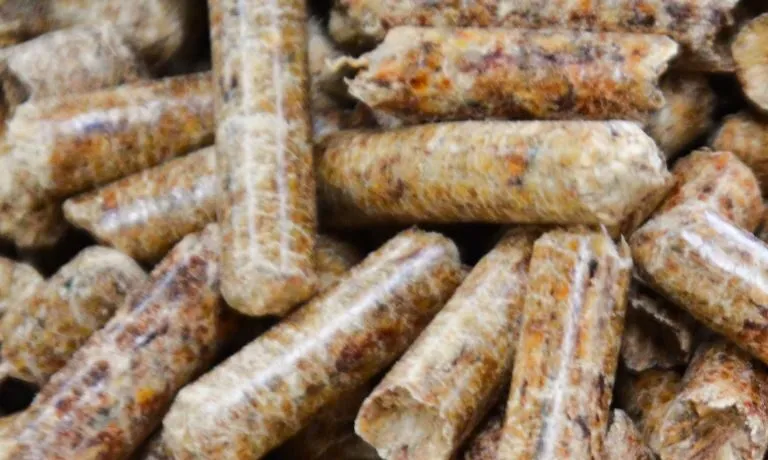
In India, various crop residues are used for making biomass pellets. These residues are abundant and represent a potential source of renewable energy. The choice of crop residue for biomass pellet production depends on factors such as regional availability, crop patterns, and the characteristics of the residues. Here are some of the major Indian crop residues used for making biomass pellets: ·  Rice Straw (चावल का पुआल) GCV: 3,200-3,500 kcal/kg Density: 80-120 kg/m³ Ash Content: 15-20% Description: A significant residue after rice harvesting, abundant in regions like Punjab and Haryana. ·  Wheat Straw (गेहूं का पुआल) [...]

Can I install a screen on the output of an impact crusher to control product size?

23 Nov 2024
1 min read

Screening Setup on Impact Crusher for Optimal Sizing Setting a screen on the output of an impact crusher is a practical way to ensure that the final product meets specific size requirements. By adding a screening system, the crushed material can be sorted, separating out oversized pieces that may need recirculation back to the crusher for further size reduction. The most common choice is a vibrating screen, which can be multi-decked to create multiple size fractions simultaneously. It helps control particle size distribution and improves product consistency. Recirculating oversized material ensures efficient utilization of the c [...]

What are the technical differences between a Hermetic Hammer Mill and an Impact Crusher?

What are the technical differences between a Hermetic Hammer Mill and an Impact Crusher?

20 Nov 2024
2 mins read

Difference Between Hermetic Hammer Mill and Impact Crusher Working Principle: Hermetic Hammer Mill: Utilizes high-speed rotary hammers that impact material to pulverize it. Material enters the mill chamber, where it is impacted by the rotating hammers and forced against a grinding plate or screen. Impact Coal Crusher: Uses impact energy for crushing. A high-speed rotor with blow bars strikes the material, throwing it against impact plates, breaking it into smaller pieces through successive impacts. Design: Hermetic Hammer Mill: Features a series of swinging hammers attached to a rotor, all enclosed in a hermetic (airtight) [...]

Water Expo Coimbatore 2024

Water Expo Coimbatore 2024

19 Nov 2024
1 min read

Water Expo Coimbatore 2024Date: November 28-30, 2024Venue: Codissia Trade Centre, Coimbatore, India Event OverviewWater Expo Coimbatore 2024, India’s leading event in the water industry, brings together organizations, vendors, and professionals in the water sector. Held at Codissia Trade Centre, this exclusive trade show is a prime opportunity for established companies, entrepreneurs, and start-ups to connect with target customers and accelerate growth. The expo focuses on water purification, treatment, and wastewater management, showcasing the latest advancements and technologies in the industry. Product Profile Wastewater Trea [...]

How do the test results of Biomass Pine Sawdust Pellets compare in terms of moisture, ash, and energy content?

How do the test results of Biomass – Pine Sawdust Pellets compare in terms of moisture, ash, and energy content?

16 Nov 2024
3 mins read

Test Results Summary for Pine Sawdust Pellets (6mm) Moisture ADB % (As Dried Basis) – 6.89%This shows the moisture content of the sample after being air dried. It indicates that 6.89% of the sample’s weight is moisture. Low moisture content is desirable for higher energy content during combustion. Ash ADB % (As Dried Basis) – 1.85%This represents the amount of ash left after burning the sample (with some moisture). Ash is the non-combustible residue, and a lower percentage is better, as it means less waste after burning. Ash DB % (Dry Basis) – 1.99%This is the ash content when all moisture is removed [...]